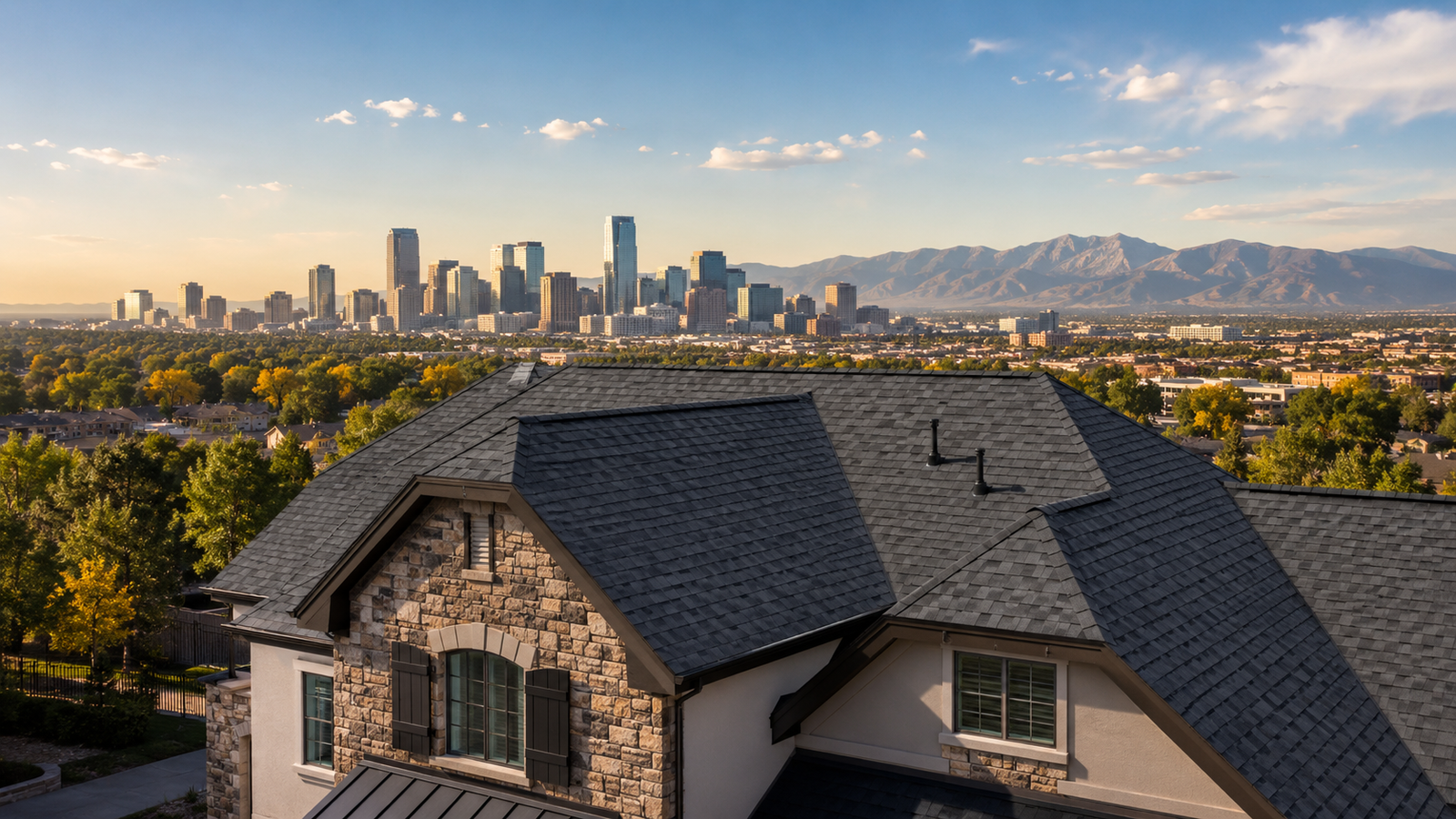
Architectural Asphalt Shingles
The most common roofing choice for Denver homes. Available in 30-50 year warranties, dimensional appearance, and impact-resistant Class 4 ratings. Best value for standard pitched roofs.
Roofing for Colorado's Capital City
Denver Roofers Co provides roof replacement, roof repair, hail and storm damage roofing, and gutter services throughout Denver. From older homes near central neighborhoods like Capitol Hill and the Highlands to newer construction in the far eastern suburbs, Denver properties include a wide range of roof slopes, materials, additions, low-slope sections, chimneys, skylights, and drainage layouts. Those differences matter when diagnosing a leak or planning a replacement. We inspect the roof as a complete system and explain which conditions need prompt attention, which can be repaired, and which may simply need monitoring.
Roofing in Denver must stand up to strong sunlight, dry periods, sudden temperature drops, snow, wind, and hail. Small weaknesses around flashing, valleys, vents, walls, and roof edges can become more noticeable when weather changes quickly. Our team looks at these vulnerable areas along with the general condition of the roofing material. We also review gutter performance because poor drainage can affect fascia, landscaping, walkways, and areas around the foundation. Call 720 943 7872 when you notice a leak, missing materials, storm damage, overflowing gutters, or signs that an older roof may be approaching replacement.
Denver's building department requires permits for most roofing replacement work. We handle permit coordination as part of the project scope so you do not need to navigate city requirements on your own. Whether the property is a Victorian home near Washington Park, a mid-century ranch in University Park, or a new-construction townhome in Stapleton, we understand the materials, slopes, and details that make each Denver roof unique.
For a written assessment and project scope, contact our local team. We provide clear pricing, transparent timelines, and a process that keeps you informed from the first call through final cleanup.
Denver's mix of historic homes, mid-century additions, and new construction creates diverse roofing challenges across the city's 155 square miles.
Central Denver neighborhoods like Capitol Hill, Highlands, and Wash Park feature homes from the 1920s-1960s with original roofs often needing replacement. East and West Denver suburbs saw building booms in the 1970s-1980s.
Denver averages 10-15 hail days per year, with April through September being peak season. The 2017 and 2022 hailstorms caused billions in damage across the metro.
Established neighborhoods near Sloan's Lake, Cheesman Park, and Washington Park have mature oak, cottonwood, and pine trees. Tree debris contributes to gutter clogging and roof abrasion on adjacent properties.
Denver's elevation creates intense UV exposure (10-15% stronger than sea level), accelerating shingle degradation. Temperature swings of 30-40°F between day and night stress roofing materials.
Victorian and Craftsman homes feature steep gable roofs with decorative elements. Mid-century ranch homes often have low-slope sections. Newer construction uses standard 6:12 pitch asphalt shingles.
Colorado weather demands materials built for it. Here are the options we recommend for Denver properties.
The most common roofing choice for Denver homes. Available in 30-50 year warranties, dimensional appearance, and impact-resistant Class 4 ratings. Best value for standard pitched roofs.
Class 4 rated shingles that resist hail damage better than standard products. Worth considering for properties on the south-facing slope with direct sun exposure. May qualify for insurance discounts.
Standing seam or exposed-fastener metal roofing lasts 40-70 years and performs well in Denver's snow and hail. Popular for ranch homes, modern builds, and low-slope sections.
Heavy, fire-resistant, and visually striking. Common on Spanish Revival and Southwestern-style homes in central Denver. Requires reinforced roof framing for proper load support.
Lightweight alternative to natural slate. Provides the high-end appearance for historic restorations without the structural load. Good for homes on the National Register or in historic districts.
For low-slope sections and flat roofs common on garages, additions, and mid-century modern homes. TPO reflects heat; EPDM is durable and cost-effective.
These are the conditions we see most often in Denver and why they matter for your roof.
Homes built before 1970 often have original or deteriorated flashing around chimneys, vents, and wall intersections. These are the most common leak sources in central Denver neighborhoods.
Denver's high altitude and 300+ days of sunshine per year break down asphalt shingles faster than lower elevations. Impact-resistant shingles extend service life by 5-10 years.
Winter snow accumulation of 15-30 inches can stress aging roofs. Ice dam formation at eaves requires proper ventilation and heat cable installation in older homes.
The 2017 and 2022 hailstorms caused widespread damage across Denver. Properties should be inspected within 48 hours of significant hail events for documentation purposes.
Mature trees in established neighborhoods drop branches, leaves, and pine needles that accelerate gutter clogging and trap moisture against the roof surface.
Denver has homes ranging from 1910 Victorians to 2020s new construction. Matching shingle colors and profiles for additions is more challenging when the existing roof is 15+ years old.
Mid-century ranch homes and modern flat-roof additions are especially vulnerable to standing water, ponding, and membrane deterioration. These areas require specialized materials and expertise.
Denver's spring and fall wind events (50-70 mph gusts) can lift shingle edges and crease tabs. Proper nailing patterns and sealant are critical for long-term performance.
We work with the mixed roof shapes, ages, additions, low-slope sections, and exterior details found throughout Denver.
Visible hail, wind, snow, and sun-related conditions are evaluated alongside ordinary aging and previous repair work.
Repair and replacement recommendations are written in straightforward language with materials, work areas, and known limitations.
We plan access, material placement, landscaping protection, debris control, and cleanup around occupied homes and active properties.
We coordinate required permits with the City and County of Denver so roofing work meets local code requirements without delays.
We document visible conditions for hail and wind events and prepare scopes that support your records and insurance process.
When shingle matching is needed for additions or repairs, we evaluate the existing roof's age, color, and profile to find the closest available match.
Our crews are based in Denver and respond quickly to inspections, repairs, and storm-related calls across the metro.
Call 720 943 7872 or fill out the online form. We arrange a convenient time to visit your Denver property and assess the roof, gutters, and exterior conditions.
We examine materials, flashing, penetrations, ventilation, drainage, and visible decking. We also photograph the condition for your records.
You receive a detailed report with repair or replacement recommendations, material options, and transparent pricing. No pressure, no hidden fees.
We handle Denver building permits, coordinate material deliveries, and plan the property protection strategy before any work begins.
Our crew completes the work on schedule, performs magnetic nail cleanup, removes all debris, and conducts a final walkthrough with you.
Whatever the service and wherever your property is located in the Denver metro, we approach every job with the same standards: inspect carefully, explain clearly, and do the work right.
Replace an aging or damaged roof with a system planned for Colorado weather.
Learn MoreInspect, document, and repair roofing damage after hail, wind, snow, or severe weather.
Learn MoreImprove roof drainage with properly planned gutter repairs, replacements, and downspout solutions.
Learn MoreWe provide roofing services to every neighborhood in Denver. Click below to see our work in your area.
We provide roof replacement, roof repair, hail and storm damage roofing, and gutter repair and installation in Denver. Contact us to schedule an inspection.
During active storm season, we prioritize properties with active water entry or significant visible damage. Scheduling can vary, but we typically arrange inspections within a few business days.
We provide visual inspections for properties in our service area. For a thorough assessment including documentation for insurance purposes, we can arrange a convenient time that works for you.
We can document visible conditions, prepare a roofing scope, and explain the work we believe is needed. Insurance coverage decisions remain with your carrier, so we don't promise claim approval — but we make the process as smooth as possible.
Yes, the City and County of Denver requires permits for most roof replacement work. We handle the permit process as part of the project so you do not need to deal with it separately.
The answer depends on the roof's age, the extent of damage, previous repairs, material condition, and whether leaks are isolated or widespread. We inspect the full roof and explain both immediate needs and likely future concerns before recommending a repair or replacement.
Architectural asphalt shingles are the most common choice for Denver homes due to their durability, appearance, and impact resistance. Impact-resistant shingles may be worth considering for hail-exposed properties. We explain product ratings and practical differences.
Most residential replacements in Denver are completed within 1-3 days, depending on roof size, complexity, weather, and any hidden decking repairs discovered during removal.
We can photograph visible conditions, prepare a roofing scope, and explain the work we believe is needed. Insurance coverage decisions remain with the property owner and insurance carrier, so we do not promise claim approval or a particular settlement.
If water is actively entering the building, call us at 720 943 7872 immediately. We can arrange an emergency assessment and temporary weather protection. If the leak is minor, we can schedule a routine inspection at a convenient time.
For roofing or gutter service in Denver, call 720 943 7872 and tell us what you have noticed.