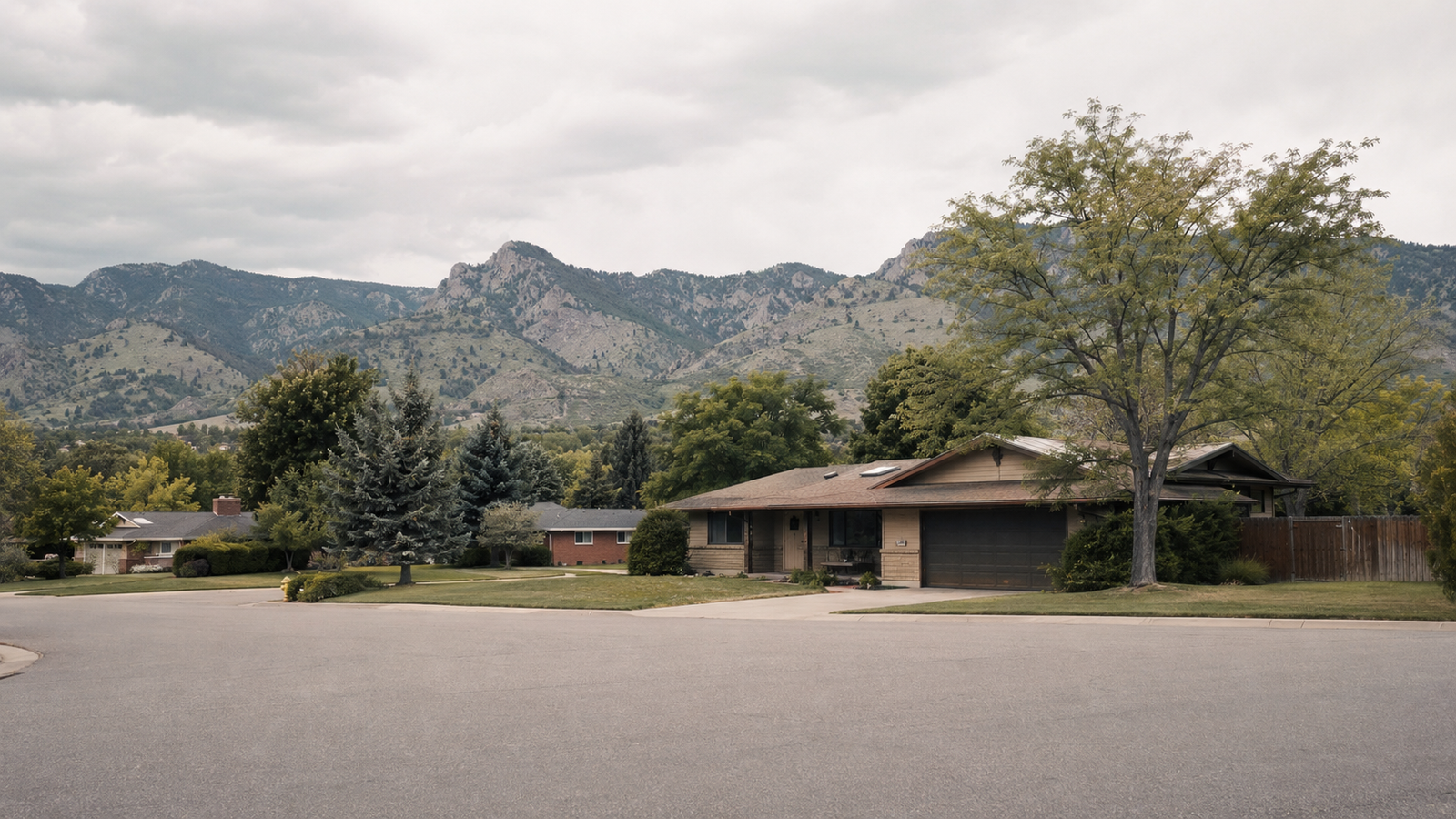
Attention to roof complexity
We account for additions, intersecting roof lines, chimneys, skylights, low-slope areas, and other details common on updated Lakewood homes.
West Metro Roofing Support
Lakewood's foothill location and varied topography create unique roofing challenges from mid-century homes to newer hillside developments.
Lakewood features mid-century homes (1950s-1970s) near Colfax and Federal, newer hillside developments (1980s-2000s) in Westwood and Bear Valley, and luxury properties near the foothills.
Lakewood's position between Denver and the Rockies creates wind channeling effects. The foothills experience earlier and more intense storm systems than the plains. Hail exposure is moderate but wind damage is significant.
Highest tree coverage among west metro cities. Mature pine, fir, and oak trees in hillside neighborhoods contribute to debris accumulation, branch damage risk, and moisture retention on north-facing roofs.
Significant elevation variation across the city. West side near foothills reaches 5,800 ft, increasing UV exposure and temperature swings. East side near Denver sits at 5,400 ft.
Hillside properties feature complex roof lines with multiple intersections, steep pitches (8:12 to 12:12), and varying materials. Foothill homes often have cedar shake or composite shake roofs.
Lakewood's extensive tree canopy creates ongoing debris accumulation, gutter clogging, and branch impact risk. Pine needles accelerate shingle deterioration and cause drainage issues.
Lakewood's extensive tree canopy creates ongoing debris accumulation, gutter clogging, and branch impact risk. Pine needles accelerate shingle deterioration and cause drainage issues.
Exposed hillside locations experience 20-30% higher wind speeds than valley properties. Ridge caps, hip materials, and edge metal require enhanced fastening in wind-prone zones.
North-facing roofs in heavily wooded areas retain moisture longer, promoting algae growth and accelerated granule loss. Proper ventilation is critical to prevent ice damming in winter.
We account for additions, intersecting roof lines, chimneys, skylights, low-slope areas, and other details common on updated Lakewood homes.
Inspections consider debris collection, gutter performance, downspout routing, branch contact, and shaded areas that may hold moisture.
A focused repair may be recommended when damage is isolated and the surrounding roof remains serviceable.
Material delivery, property protection, landscaping, access, debris removal, and final cleanup are discussed before installation.
Whatever the service and wherever your property is located in the Denver metro, we approach every job with the same standards: inspect carefully, explain clearly, and do the work right.
Replace an aging or damaged roof with a system planned for Colorado weather.
Learn MoreInspect, document, and repair roofing damage after hail, wind, snow, or severe weather.
Learn MoreImprove roof drainage with properly planned gutter repairs, replacements, and downspout solutions.
Learn MoreWe provide roof replacement, roof repair, hail and storm damage roofing, and gutter repair and installation in Lakewood. Contact us to schedule an inspection.
During active storm season, we prioritize properties with active water entry or significant visible damage. Scheduling can vary, but we typically arrange inspections within a few business days.
We provide visual inspections for properties in our service area. For a thorough assessment including documentation for insurance purposes, we can arrange a convenient time that works for you.
We can document visible conditions, prepare a roofing scope, and explain the work we believe is needed. Insurance coverage decisions remain with your carrier, so we don't promise claim approval — but we make the process as smooth as possible.
Speak with our team about roofing service in Lakewood at 720 943 7872.