Open-exposure awareness
Recommendations account for wind, hail, sunlight, snow movement, and the way weather reaches different roof slopes.
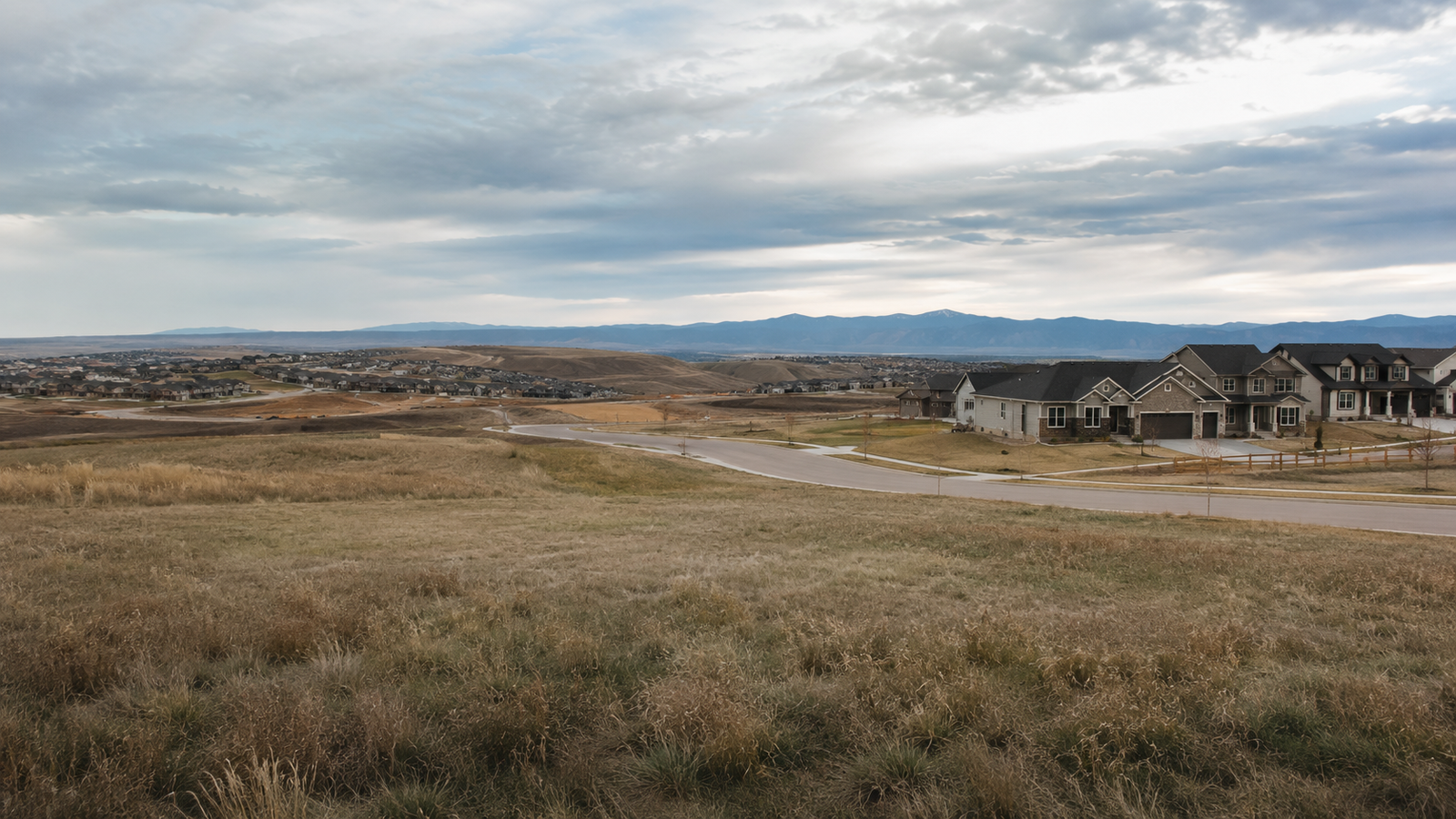
Parker's rapid growth from ranch land to suburbia in the 2000s-2010s created a very young housing stock with modern roofing standards.
Parker is one of the youngest communities in the metro. Most homes were built during the 2000s-2010s development boom. Ranch-style communities and newer townhome developments dominate the housing stock.
Open south metro location provides minimal wind buffering. Parker experiences consistent wind events with gusts to 65+ mph. Hail exposure is moderate but wind-driven rain creates significant infiltration risk.
Very low tree coverage typical of new developments. Minimal mature tree presence means less debris and branch damage but also less shade protection for roofs. South-facing roofs receive maximum sun exposure.
Highest elevation among commonly served communities, creating significant UV exposure. Elevation contributes to accelerated shingle aging and increased temperature swing stress on roofing materials.
Newer construction features varied roof pitches (5:12 to 8:12) with premium architectural shingles, enhanced ventilation, and energy-efficient materials. Townhome developments use composite and synthetic materials.
Despite modern construction, wind uplift remains Parker's primary roofing concern. Fast-paced development sometimes resulted in rushed installation with inadequate nailing patterns requiring correction.
Despite modern construction, wind uplift remains Parker's primary roofing concern. Fast-paced development sometimes resulted in rushed installation with inadequate nailing patterns requiring correction.
Parker's high elevation and low tree canopy create maximum UV exposure in the metro area. Impact-resistant and cool-roof shingles provide significant longevity benefits in these conditions.
Parker's rapid development created strict storm water retention requirements. Roof drainage systems must handle concentrated flows while meeting city retention pond and detention basin specifications.
Recommendations account for wind, hail, sunlight, snow movement, and the way weather reaches different roof slopes.
Measurements, valleys, penetrations, runoff areas, access, and material placement are considered before pricing replacement.
We discuss material condition and matching so you understand whether a local repair can be completed responsibly.
Gutters, outlets, downspouts, and discharge locations are evaluated when large roof areas concentrate water.
Whatever the service and wherever your property is located in the Denver metro, we approach every job with the same standards: inspect carefully, explain clearly, and do the work right.
Replace an aging or damaged roof with a system planned for Colorado weather.
Learn MoreInspect, document, and repair roofing damage after hail, wind, snow, or severe weather.
Learn MoreImprove roof drainage with properly planned gutter repairs, replacements, and downspout solutions.
Learn MoreWe provide roof replacement, roof repair, hail and storm damage roofing, and gutter repair and installation in Parker. Contact us to schedule an inspection.
During active storm season, we prioritize properties with active water entry or significant visible damage. Scheduling can vary, but we typically arrange inspections within a few business days.
We provide visual inspections for properties in our service area. For a thorough assessment including documentation for insurance purposes, we can arrange a convenient time that works for you.
We can document visible conditions, prepare a roofing scope, and explain the work we believe is needed. Insurance coverage decisions remain with your carrier, so we don't promise claim approval — but we make the process as smooth as possible.
Call 720 943 7872 for roof or gutter service in Parker.